
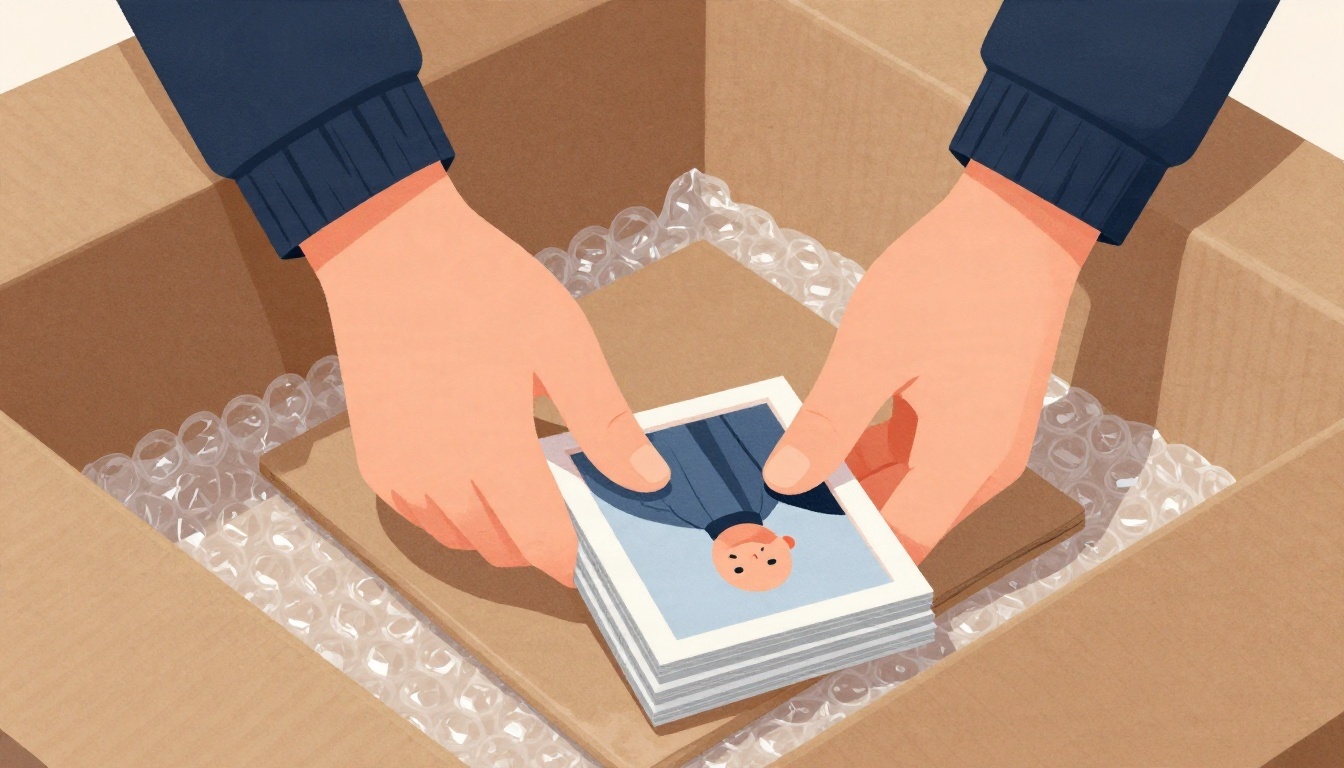
Most grading damage happens before your cards ever reach the grading room. A corner dinged in transit, a surface scuffed by a hard holder, or a box that shifts in the mail can turn a potential gem into a mid-grade card — and no grader can undo that. Packing is the one part of the submission process you fully control, so it is worth doing deliberately.
This guide walks through the supplies, the layering method, and the insurance decisions that protect your declared value. It applies whether you are sending one card or a full order.
According to PSA's shipping guidance, which holder type should submitters avoid using for cards sent in for grading?
Select one answer.
Start with the right supplies
Grading companies publish their own packaging preferences, and they differ in important ways. PSA's shipping guidance calls for sleeved cards in semi-rigid holders and explicitly discourages toploaders, tape, pull tabs, and sticky notes. CGC's instructions ask for each card in a protective sleeve, then a semi-rigid sleeve sturdy enough for safe removal, followed by a cardboard sandwich secured with rubber bands that are snug but not too tight.
A practical supply list:
- New penny sleeves for every card — old sleeves can hold dust or grit that scratches surfaces.
- Semi-rigid holders (Card Saver-style) sized correctly for standard or thick cards.
- Two clean cardboard pieces slightly larger than the card stack.
- Low-tack painter's tape to seal the cardboard sandwich without residue.
- Bubble wrap to stop movement inside the box.
- A new, sturdy corrugated box — not a padded envelope alone.
The layering method, step by step
- Sleeve each card in a fresh penny sleeve, inserting it so both sides remain fully visible.
- Place each sleeved card into a semi-rigid holder. Match holder size to card thickness; forcing a thick card into a standard holder bends it.
- Order the cards to match your submission form. CGC's packing instructions ask submitters to place cards in the order they appear on the packing slip, which speeds intake and reduces handling errors.
- Sandwich the stack between two cardboard pieces larger than the cards, then secure with rubber bands that hold firmly without compressing the stack. CGC warns that packing too tightly can damage cards if the package is mishandled.
- Wrap the sandwich in bubble wrap so it cannot slide inside the box.
- Fill all empty space in the box with packing material. A box with room to shift is a box that will shift.
- Include the required paperwork — packing slip or confirmation pages — and seal every seam with packing tape.
For higher-value orders, double-boxing is the standard: place the small, well-padded box inside a larger shipping box with cushioning between the walls. Secursus's 2026 shipping guide recommends double-boxing and a signature requirement above $500.
Photograph everything before you seal the box
Take clear front and back photos of every card, plus photos of the packed interior. Insurance claims require proof of condition and value, and photos taken before shipping are the cleanest evidence you can hold. This takes five minutes and is the difference between a smooth claim and a disputed one.
Insure for the full declared value
Inbound shipping is your responsibility, not the grader's. PSA states that it does not provide insurance for inbound packages and that submitters can purchase coverage from third-party providers. That means the coverage decision is yours.
Key points to get right:
- Declare and insure the full value. If you are sending $5,000 worth of cards, declare and insure $5,000, as PreGradeCards' insurance guide advises.
- Know carrier limits. FedEx places collector's items, including sports cards, in a $1,000 declared value category, and UPS terms limit packages to $1,000 unless a high-value shipment summary is signed at pickup, per Secursus. Third-party insurance covers value above those caps.
- Use tracked service and require a signature on valuable shipments.
- Keep receipts and tracking numbers with your photos until the order is marked received.
Common packing mistakes to avoid
- Using hard toploaders for a submission that specifies semi-rigid holders.
- Taping directly over a holder or using pull tabs, which PSA discourages.
- Over-tightening rubber bands or cramming cards into an undersized box.
- Shipping in a padded envelope with no rigid structure.
- Skipping insurance on a high-value order to save a few dollars.
Quick pre-ship checklist
- Every card in a new penny sleeve and correctly sized semi-rigid holder
- Cards ordered to match the submission form
- Cardboard sandwich secured with snug, not tight, rubber bands
- Bubble wrap and void fill so nothing moves
- Paperwork included, box fully sealed
- Front and back photos taken of every card
- Full-value insurance, tracking, and signature on the label
Packing well does not guarantee a high grade, but packing poorly can guarantee a lower one. Treat the box as part of the submission, not an afterthought.
How the Featured Expert Can Help
Trophy Room Card Grading offers AI-powered grading for trading cards with fast turnaround and transparent pricing, positioned as a specialized, small-scale service for collectors who want consistent, objective results. If you are ready to submit, you can review its process and pricing at Trophy Room Card Grading.
Before you ship, confirm the service's current holder and packaging requirements, since those instructions take priority over general advice.